Patient Overview
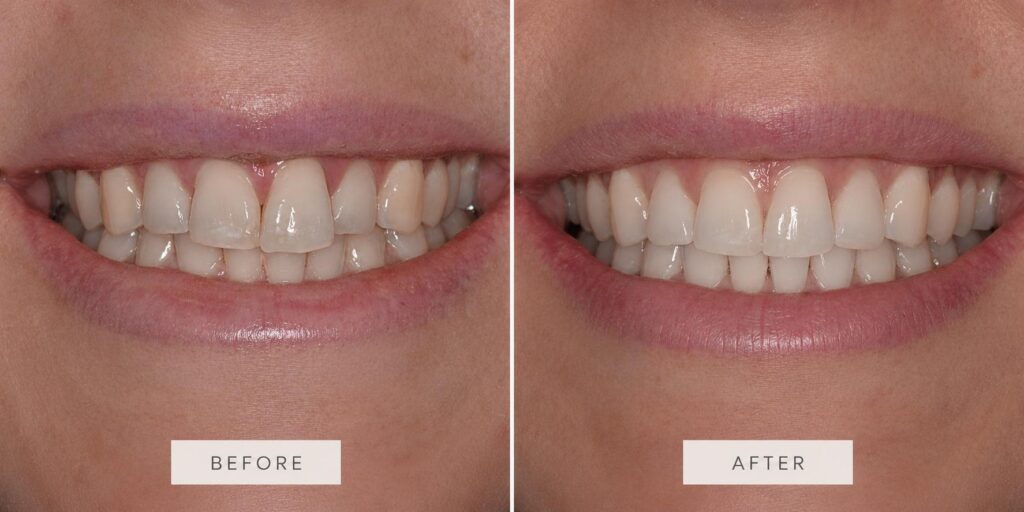
At first glance, this patient already had a naturally attractive smile. The aesthetic changes needed were subtle, and the before-and-after photographs may not immediately reveal the full extent of the transformation.
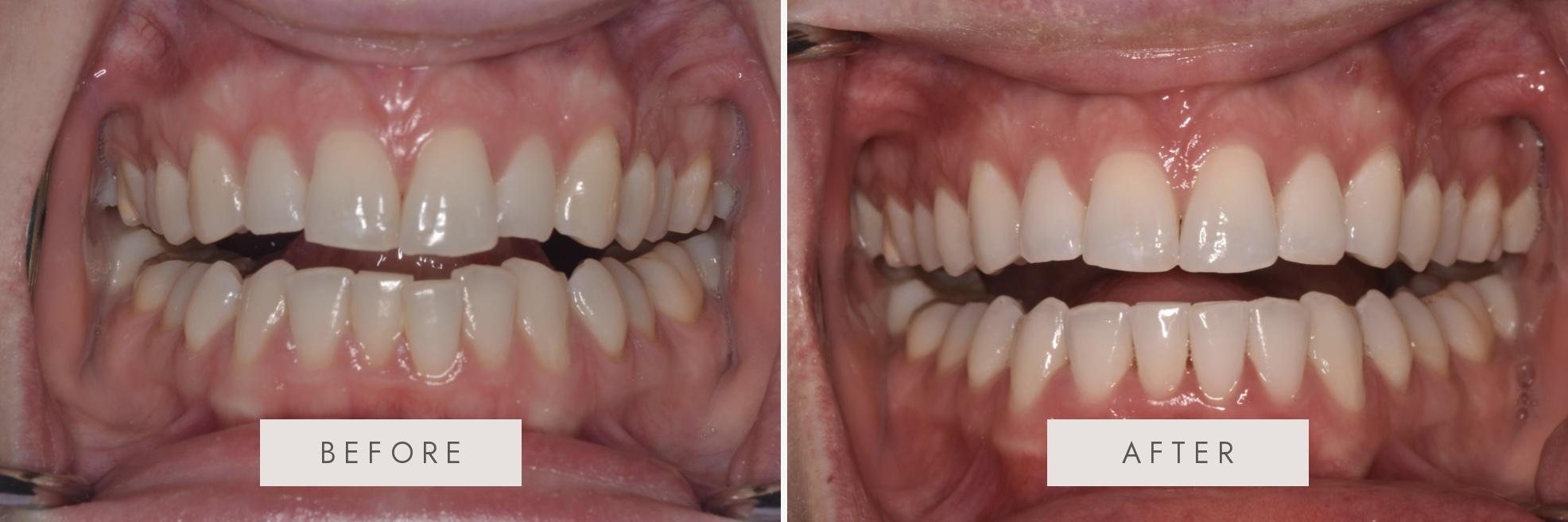
However, a closer examination showed several underlying concerns that affected both the appearance and function of the smile. The upper and lower front teeth were crowded, the upper teeth had chipped edges, and the smile appeared relatively narrow.
Most importantly, the patient had bite and alignment issues that needed to be addressed before making cosmetic changes to the teeth.
Rather than simply changing the appearance of the smile, treatment focused first on creating the correct foundation with Invisalign, followed by composite bonding to restore the natural shape of the upper front teeth.
Key Outcomes
- Crowding of the upper and lower front teeth corrected with Invisalign
- Bite and tooth positioning improved
- Smile widened through improved tooth alignment
- Chipped and worn edges of the upper front teeth restored
- Natural shape and proportions of the front teeth enhanced with composite bonding
- Cosmetic treatment completed after orthodontic correction
The Initial Assessment
This case is a good example of why some smile transformations are not immediately obvious when looking at a before-and-after photograph.
The patient already had a pleasant-looking smile, but closer examination revealed several areas that could be improved.
The initial assessment identified:
- Chipped edges on the upper front teeth
- Crowding among the upper and lower front teeth
- A relatively narrow smile
- Bite and alignment concerns
- Irregular positioning of the front teeth
- Excessive tartar accumulation due to the lack of space
The goal was not to completely change the patient’s smile, but to refine it while addressing the underlying functional concerns.
Because the teeth were crowded and not ideally positioned, simply adding bonding to the front teeth would not have addressed the bite or created the ideal foundation for the final result.
For this reason, treatment began with orthodontic correction.
Treatment Phase 1: Invisalign
The first stage of treatment focused on repositioning the teeth and improving the patient’s bite using Invisalign clear aligners.
The teeth were gradually moved into their correct positions, addressing the crowding of the upper and lower front teeth while creating a broader and more balanced smile.
This stage was important not only for aesthetics but also for function. By correcting the position of the teeth and improving the bite before restorative treatment, the final bonding could be designed around a more stable and predictable foundation.
Following Invisalign treatment, the teeth were in their correct positions and the underlying alignment and bite concerns had been addressed.
At this point, the remaining aesthetic concerns became more apparent: the edges of the upper front teeth had been chipped and their natural shape could be refined.
Treatment Phase 2: Restoring the Natural Shape with Bonding
Once the orthodontic portion of treatment was complete, conservative composite bonding was used to enhance the upper front teeth.
The goal was not to dramatically change the patient’s smile, but to restore the natural contours and proportions of the teeth.
Bonding was carefully added to the front upper teeth to rebuild the chipped edges and refine their shape. The material was colour-matched to blend naturally with the existing teeth, allowing the result to remain subtle and harmonious with the patient’s original smile.
Why Orthodontics Came First
This case demonstrates an important principle in cosmetic dentistry: the best aesthetic result often starts with correcting the position of the teeth first.
Although the patient’s primary concerns may have appeared cosmetic, the crowding and bite issues needed to be addressed before restorative treatment.
By using Invisalign first, the teeth could be moved into the appropriate positions rather than using bonding to compensate for their original alignment.
Once the orthodontic treatment was complete, bonding could then be used for what it does best, making small, precise changes to the shape and appearance of the teeth while preserving the natural tooth structure.
The Final Result
The completed treatment created a subtle but meaningful enhancement to an already attractive smile.
The Invisalign treatment corrected the crowding, improved the bite, and placed the teeth in their proper positions. Composite bonding then restored the chipped edges and brought back the natural shape and proportions of the upper front teeth.
The result is not a dramatically different smile and that is part of what makes this case successful.
The treatment was designed to enhance what was already there while addressing the underlying functional concerns that were not immediately visible in the before-and-after photographs.
Considering a Subtle Smile Enhancement?
If your smile already looks relatively healthy and attractive but you have concerns about crowding, chipped teeth, tooth positioning, or your bite, a comprehensive assessment can help identify improvements that may not be obvious at first glance.
At Cooper Dental, treatment is planned around both the appearance and function of your smile. In some cases, this may mean combining Invisalign with conservative cosmetic treatments such as composite bonding to achieve a natural-looking result while preserving as much healthy tooth structure as possible.
Book an appointment today!