
Patient Overview
A patient visited Cooper Dental seeking improvement in the overall appearance of their smile. While their teeth were healthy, several alignment issues were affecting smile aesthetics and facial balance.
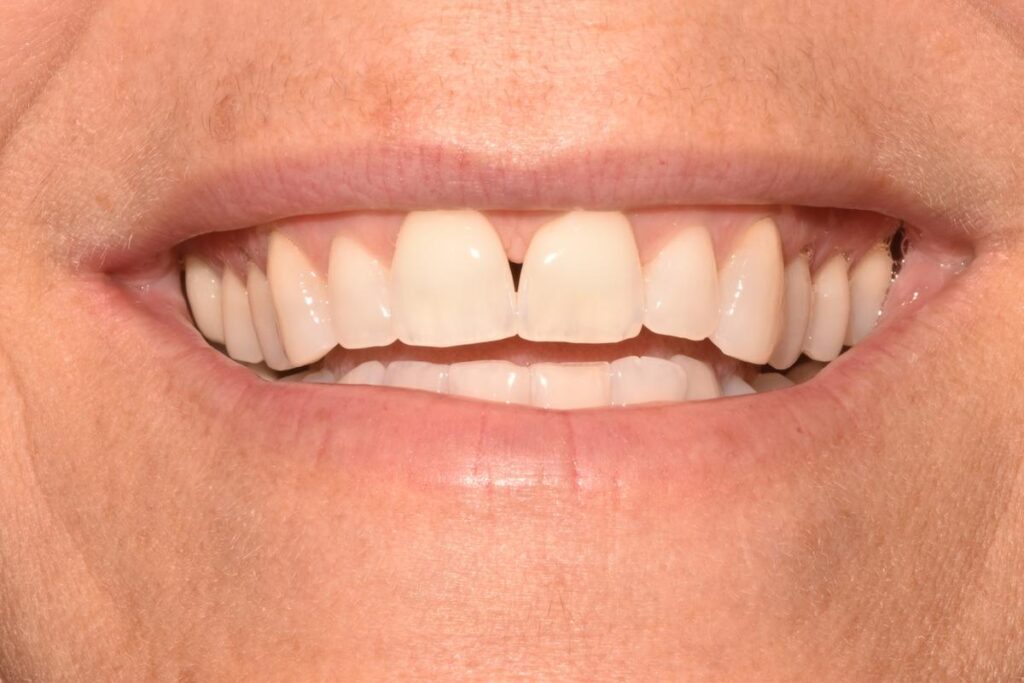
The most significant concern was a reverse smile curve, where the upper front teeth appeared shorter than the surrounding teeth. Additional issues included dark triangular spaces near the gumline and inwardly positioned side teeth that reduced facial support.
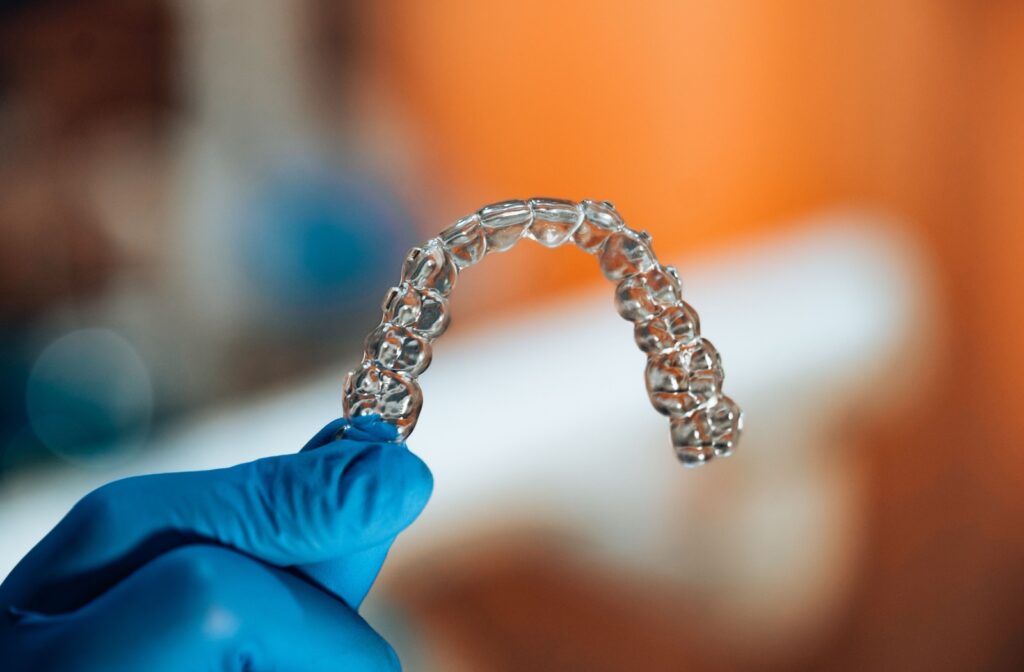
Using Invisalign clear aligners, the treatment focused on creating a more balanced smile while improving overall harmony between the teeth, lips, and facial features.
Key Outcomes
- Reverse smile curve corrected to create a more natural smile arc
- Upper front teeth repositioned for improved smile aesthetics
- Dark triangular spaces between the front teeth reduced through alignment changes
- Dental arch expanded to improve facial support and smile fullness
- Symmetry and overall smile balance significantly enhanced
Before Invisalign
After Invisalign
Initial Assessment
During the consultation, several contributing factors were identified:
- A reverse smile curve causing the upper front teeth to appear shorter than the surrounding teeth
- Excessive visibility of the lower teeth during speech and smiling
- Dark triangular spaces between the upper front teeth near the gumline
- Inwardly inclined side teeth creating a narrower dental arch
- Reduced support for the cheeks and surrounding facial structures
Together, these issues affected both smile aesthetics and facial balance. The patient’s upper teeth were not following the natural curvature of the lower lip, resulting in a smile that appeared less harmonious than intended.
Treatment Phase 1: Correcting the Reverse Smile Curve
The primary focus was improving the position of the upper front teeth.
Because the front teeth were positioned higher than ideal, they appeared shorter when the patient smiled. This altered the natural smile arc and shifted visual attention toward the lower teeth.
Through a series of clear aligners, the upper front teeth were gradually moved into a more ideal position. As treatment progressed, the smile arc became more consistent with the contour of the lower lip, creating a more balanced and youthful appearance.
The improved positioning also reduced the prominence of the lower teeth during speech and smiling.
Treatment Phase 2: Addressing Dark Triangular Spaces
Examination revealed visible black triangles between the upper central incisors.
These spaces were primarily caused by tooth angulation rather than missing tooth structure. The position of the teeth created gaps near the gumline that appeared as dark shadows when the patient smiled.
By adjusting the angulation and alignment of the front teeth, the spaces were significantly reduced. As the teeth moved into more favourable positions, the surrounding gum tissue was better supported, creating a more uniform appearance across the smile.
Treatment Phase 3: Expanding the Smile and Improving Facial Support
The patient’s side teeth were positioned inward, creating a relatively narrow dental arch.
This limited the visible width of the smile and provided less support for the cheeks. In some cases, a narrow arch can contribute to a more hollow appearance around the corners of the mouth.
Invisalign treatment allowed for controlled arch development by repositioning the side teeth outward into a broader and more functional alignment.
As the arch widened, the smile appeared fuller and more proportional. The repositioned teeth also provided improved support for the cheeks and surrounding soft tissues.
The Result
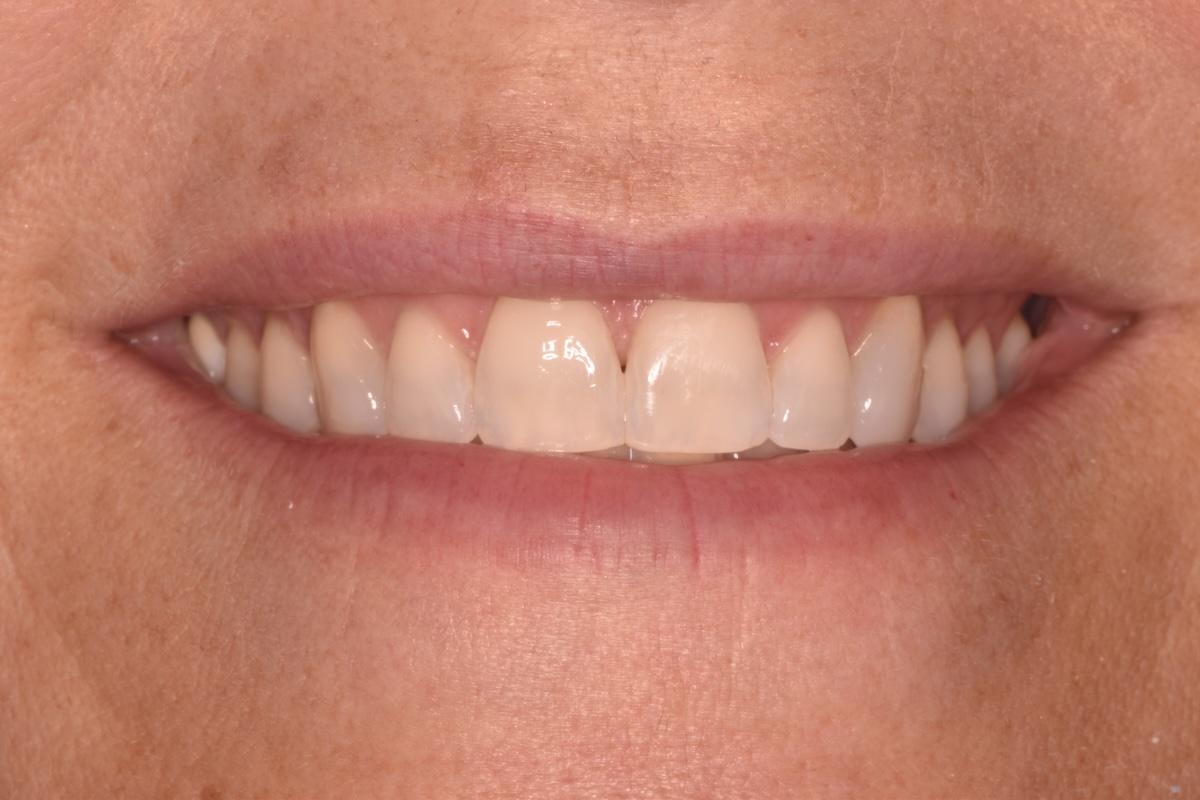
Following Invisalign treatment, the patient achieved a noticeably more balanced and symmetrical smile.
Key improvements included:
- A natural smile curve that follows the contour of the lower lip
- Better visibility and proportion of the upper front teeth
- Reduced dark triangular spaces near the gumline
- A fuller smile created through arch expansion
- Improved facial support and overall smile harmony
The final result enhanced not only the appearance of the teeth but also the way the smile complemented the patient’s overall facial features.
Considering Invisalign Treatment?
This case highlights how orthodontic treatment can address concerns that extend beyond simple crowding or spacing.
Small changes in tooth position can influence smile symmetry, facial balance, soft tissue support, and overall aesthetics. By carefully evaluating these relationships, Invisalign treatment can create improvements that are both functional and visually significant.
If you feel your smile appears uneven, your front teeth seem too short, or you notice dark spaces between your teeth, a consultation can help determine whether alignment may be contributing to these concerns.
The team at Cooper Dental can assess your smile and develop a personalized treatment plan designed to improve both function and aesthetics through Invisalign therapy.
Visit us for a consultation by scheduling an appointment.