

Patient Overview
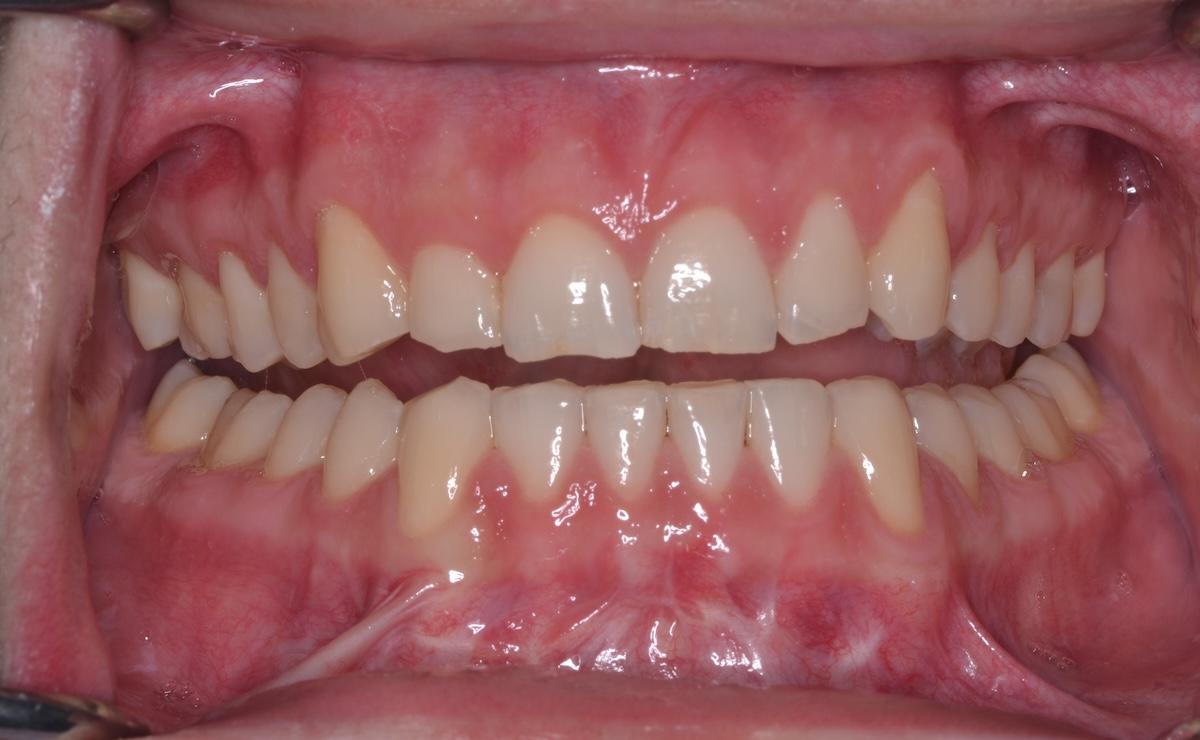
A patient visited Cooper Dental concerned about chipped front teeth and visible wear that had developed gradually over time. Clinical examination revealed signs of chronic tooth grinding (bruxism) combined with bite misalignment, creating excessive pressure on specific teeth and accelerating enamel damage.
Rather than simply repairing the chipped areas, treatment focused on addressing the underlying cause of the wear before restoring the appearance and function of the smile.
Key Outcomes
- Bite alignment corrected using Invisalign over a 12-month treatment period
- Excessive pressure on vulnerable teeth significantly reduced
- Professional whitening completed to establish a uniform tooth shade
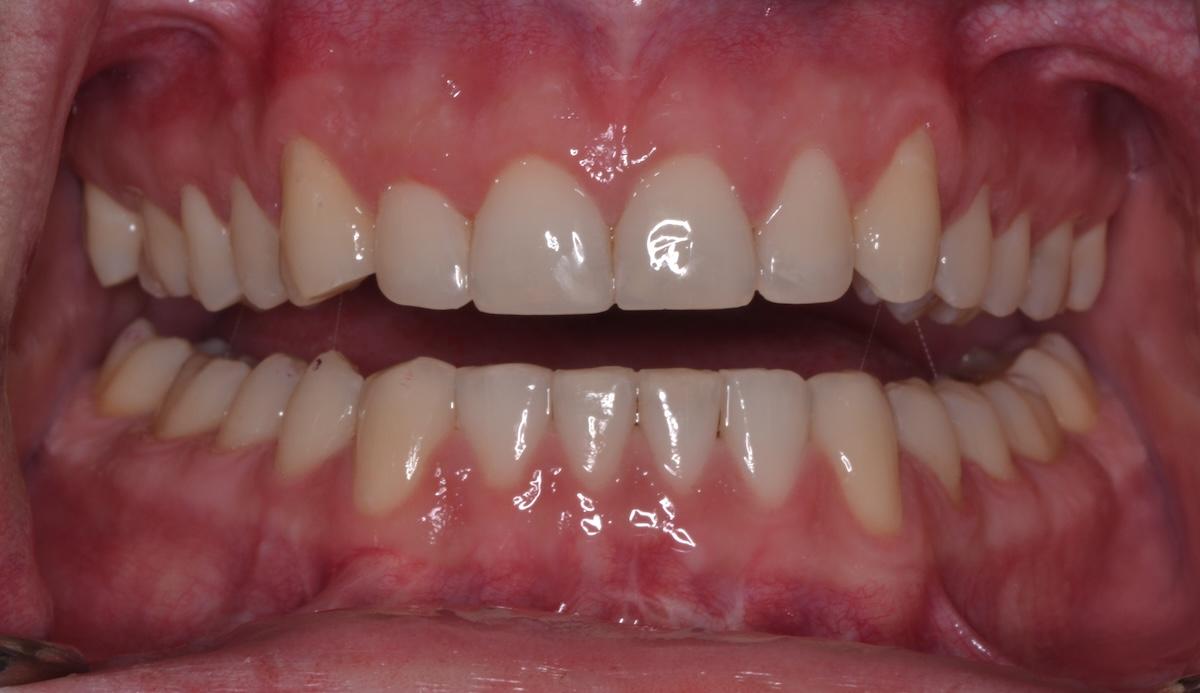
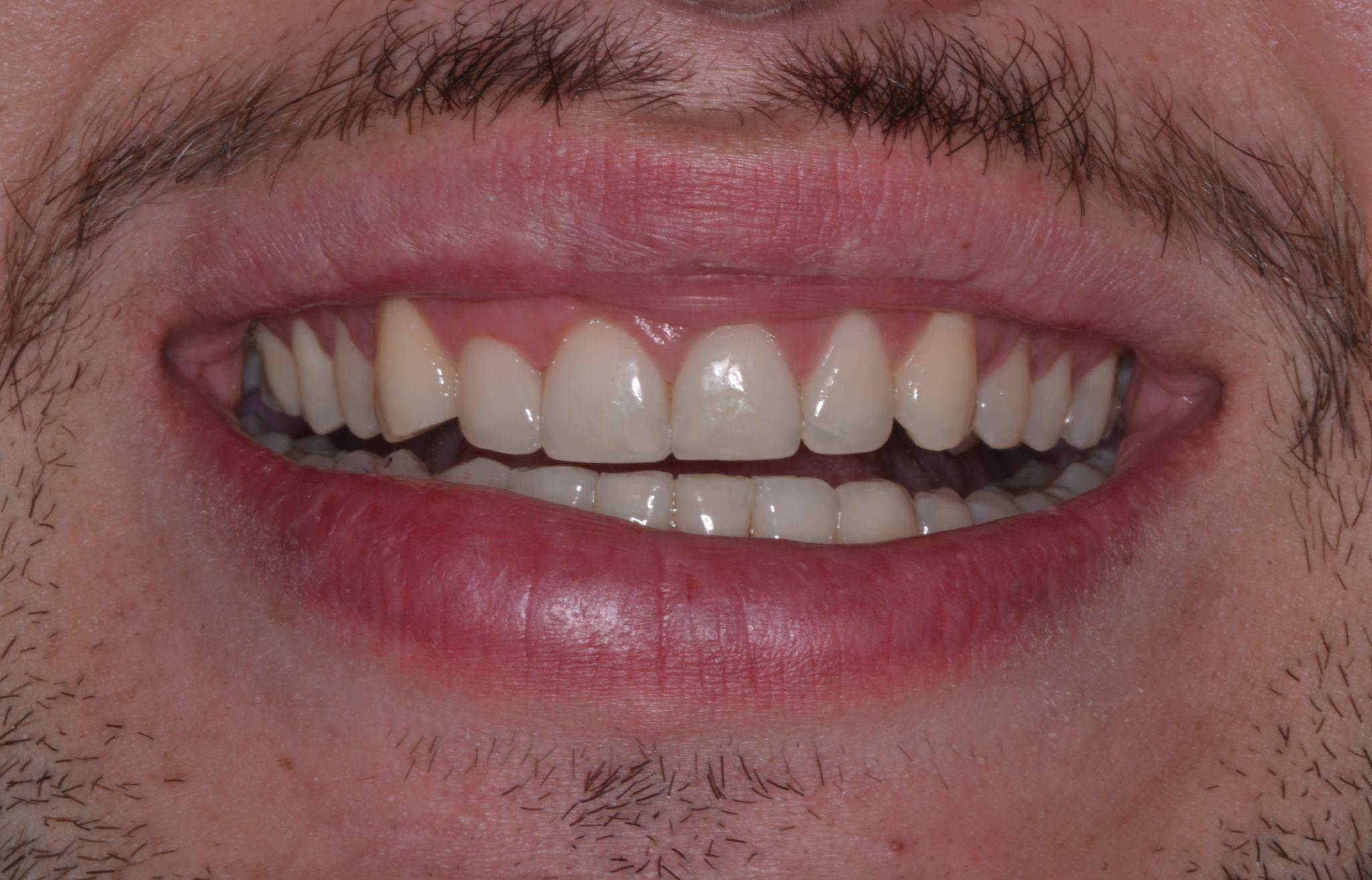
- Chipped and worn edges restored with composite resin bonding.
- Custom night retainers provided to protect the teeth and maintain results
The Initial Assessment
The patient presented with several common signs associated with long-term grinding and an uneven bite:
- Chipped front teeth
- Worn and flattened tooth edges
- Early enamel fractures
- Evidence of excessive pressure on specific teeth
- Jaw tension consistent with grinding habits
The examination showed that the patient’s upper and lower teeth were not meeting evenly. As a result, certain teeth were absorbing more force than others during chewing and grinding, leading to progressive wear and chipping.
Because the underlying bite issues remained unresolved, simply placing composite bonding would have increased the risk of future damage and restoration failure.
Treatment Phase 1: Bite Correction with Invisalign
The first stage of treatment focused on correcting the patient’s bite through Invisalign clear aligner therapy. Over the course of one year, a series of custom aligners gradually repositioned the teeth both horizontally and vertically to create a healthier, more functional bite.
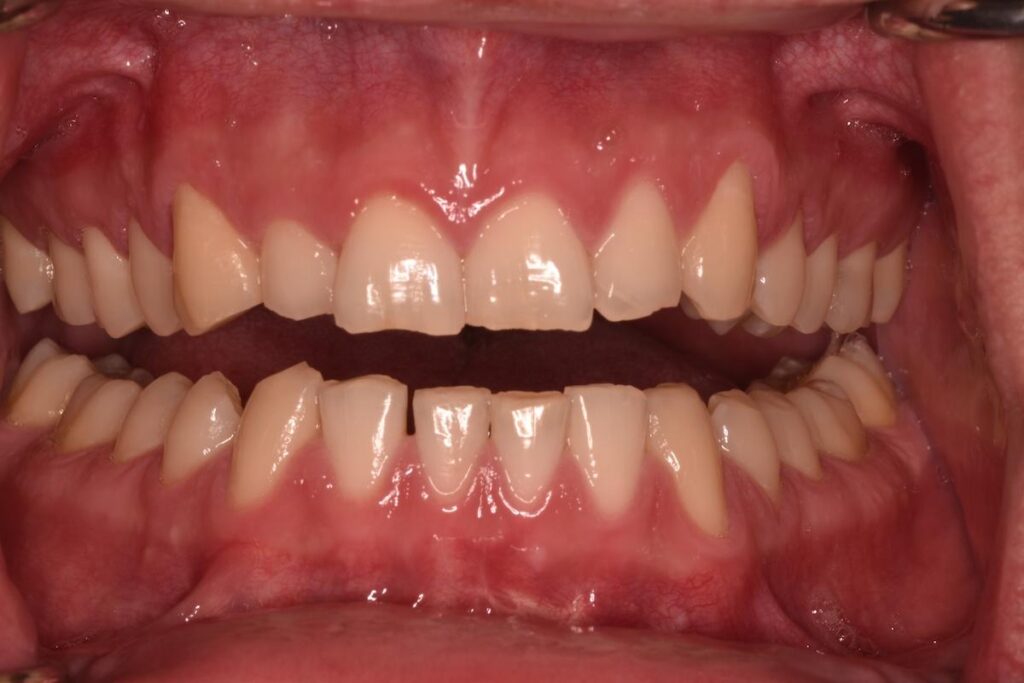
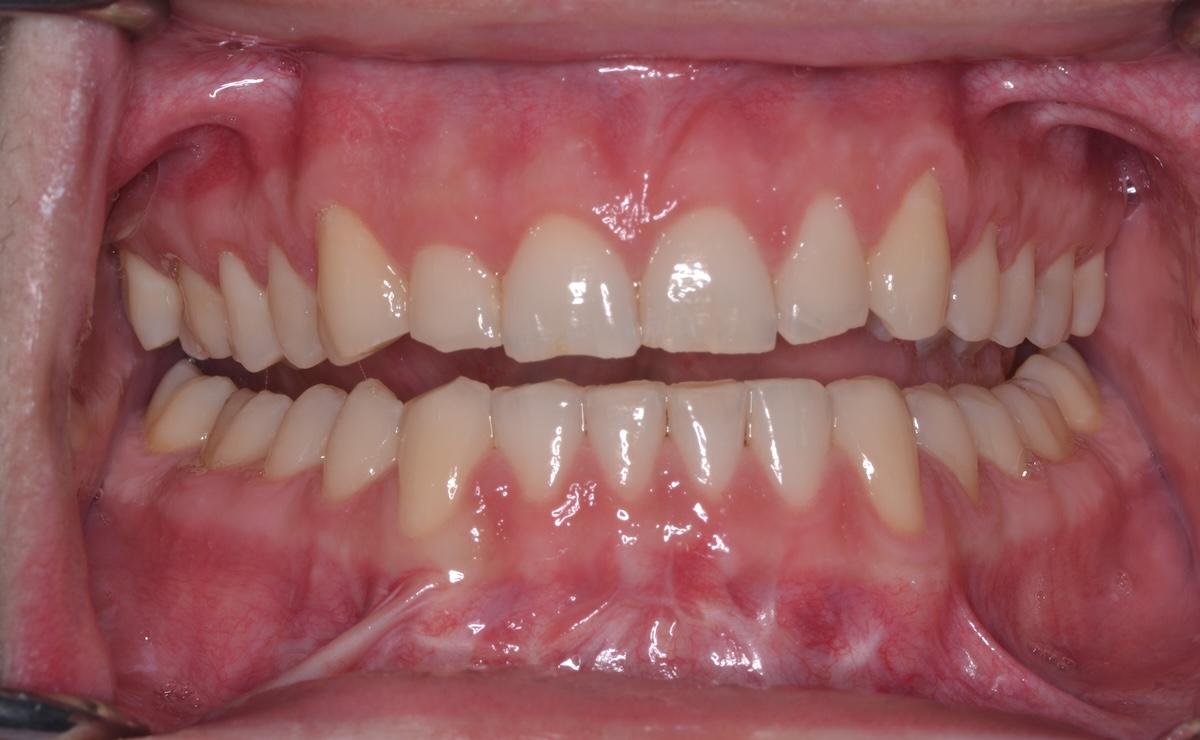
The most visible improvements included closing the gap between the lower front teeth, straightening the lower incisors, and levelling the bite. Equally important, although not apparent in the photographs, was the creation of additional space in the front of the bite as it was corrected. This relieved the excessively tight bite that had been placing damaging forces on the front teeth.
By establishing proper spacing and a balanced bite relationship, the foundation was created for the next phase of treatment. The improved bite reduces stress on the future bonded restorations, helping to minimize the risk of chipping or fracture and supporting their long-term durability.
Before Invisalign
After Invisalign
Treatment Phase 2: Professional Whitening
Once tooth movement was complete, the patient underwent professional whitening treatment.
This step helped remove staining and brighten the natural enamel before any restorative work was completed. Whitening first allowed the final restorations to be matched to the patient’s desired shade, helping ensure a consistent and natural-looking result across the smile.
Treatment Phase 3: Composite Bonding and Smile Restoration
With the bite corrected and the final tooth shade established, attention turned to restoring the chipped and worn teeth.
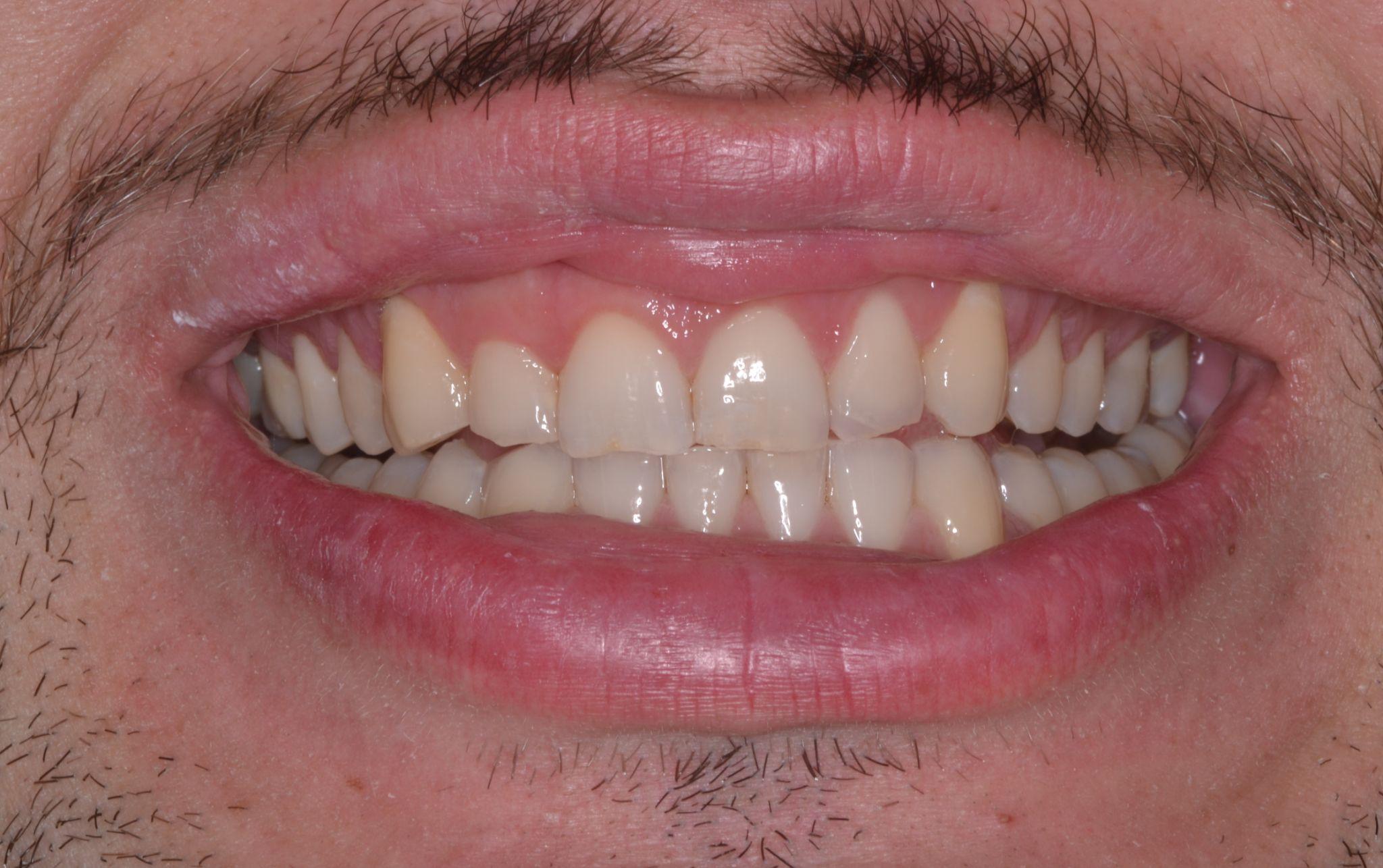
Composite resin was carefully applied to the upper and lower front teeth to rebuild lost structure and recreate natural tooth contours. The material was sculpted and polished to blend seamlessly with the surrounding enamel.
Because the patient’s bite had already been corrected, the restorations could be designed to function properly without being subjected to the excessive forces that contributed to the original damage.
Long-Term Protection
To protect the final result, the patient was provided with custom night retainers. These appliances serve two important purposes:
- Maintaining the newly aligned tooth positions.
- Acting as a protective barrier during sleep to reduce the impact of grinding and clenching forces.
This ongoing protection helps preserve both the natural teeth and the composite restorations over time.
Before Bonding
After Bonding
The Final Result
By addressing both the underlying bite issues and the visible tooth damage, the patient achieved a healthier, more balanced smile with restored tooth shape and improved aesthetics.
This case demonstrates the importance of treating the cause of enamel wear, not just the symptoms. Through a combination of Invisalign, whitening, composite bonding, and long-term retention, Cooper Dental was able to create a comprehensive treatment plan that improved both function and appearance while helping reduce the risk of future damage.
Considering Treatment for Chipped or Worn Teeth?
If you’re noticing worn edges, small chips, or signs of grinding, an assessment can help determine whether bite alignment may be contributing to the problem. The team at Cooper Dental can evaluate your smile and discuss treatment options designed to restore damaged teeth while protecting them for the future. Schedule an appointment today.