

Key Takeaways
- Regular interdental cleaning removes hidden plaque from tight spaces.
- Proper flossing technique requires wrapping the thread around the base of each tooth.
- Water devices offer comfortable alternatives for delicate orthodontic work.
- Your dentist in downtown Calgary can provide personalized recommendations.
Make Flossing a Part of Your Routine
Brushing alone leaves behind debris in the narrow spaces between your teeth, allowing plaque to build up quietly in these hidden areas over time.
To floss properly, gently curve the floss around each tooth in a C-shape, clean just below the gumline with up-and-down motions, and use a fresh section of floss for each tooth. At Cooper Dental, our team is here to support you, and that includes offering advice on best practices for flossing.
Why Interdental Care Matters for Your Smile
Your toothbrush bristles reach the front, back, and chewing surfaces of your teeth. However, these bristles physically cannot access the contact points where two teeth touch. This means that small particles can sit in those spaces undisturbed. These leftover particles contribute to soft film buildup.
Advantages of flossing include:
- Targeted reach. Dental floss easily accesses the tiny gaps where bristles bend and stop.
- Tartar prevention. Daily cleaning helps stop soft plaque from hardening into calculus.
- Gum health. Consistent habits support a strong foundation for your entire smile.
Tools for Your Dental Routine
String & Dental Tape
Walking down the oral care aisle presents you with dozens of choices. Choosing the right product makes your daily routine much more comfortable.
- Classic dental floss. This thin material slides easily into tight, crowded spaces without catching.
- Dental tape. A flatter, wider surface works well for larger gaps.
- Comfort choice. Woven varieties of dental floss expand slightly to grab debris gently.
Water Devices, Interdental Brushes, and Floss Threaders
Some people find flossing their teeth the traditional way to be awkward or uncomfortable. While we recommend flossing, there are other ways to clean between your teeth:
- Water flossers. Pulsing liquid gently washes away trapped food particles.
- Interdental brushes. Small cylindrical heads clean wider spaces with targeted precision.
- Floss threaders. Helpful for cleaning under bridges.
- Professional advice. Your dentist in downtown Calgary can offer recommendations tailored to your situation.
A Step-by-Step Guide to Proper Technique
Preparation & Hand Placement
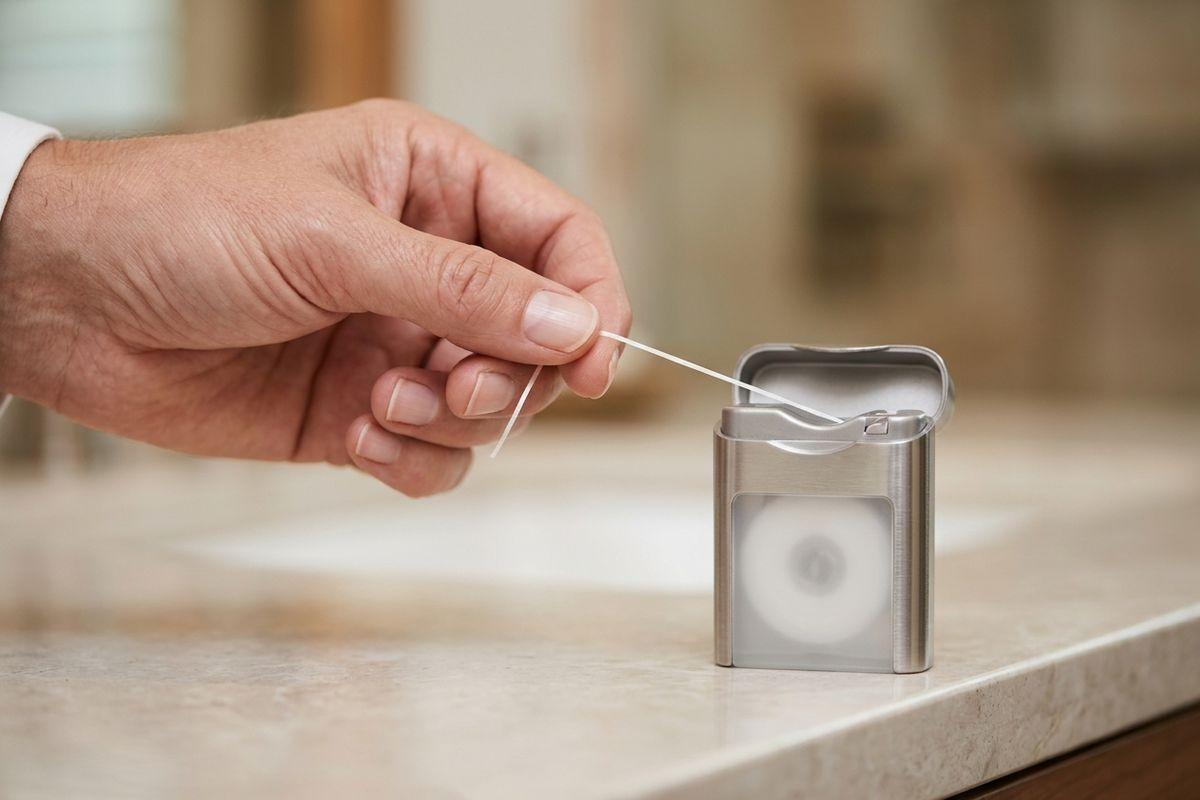
Good flossing habits prevent accidental gum irritation.You will need enough floss that you can use a fresh section for every tooth.
- Length. Wrap eighteen inches of thread around your middle fingers.
- Grip. Pinch two inches firmly between your thumbs and index fingers.
- Control. Keep your hands steady for precise, gentle movements.
The C-Shape Method
Snapping the string down forcefully can harm the tissue of your gums. A gentler approach can still clean the area thoroughly, without causing damage.
- Curve the floss around your tooth.
- Slide the floss gently just under the visible gum line.
- Rub the string up and down the side of your tooth enamel.
Transition to the Next Tooth
Reusing the same piece of thread simply moves bacteria to a new spot. You want to lift debris completely out of your mouth. Unwind a section clean thread from your middle finger for the next tooth, then repeat the steps above. Make sure to clean both sides of every tooth, and reach behind your back molars carefully to remove hidden plaque.
Should You Floss Before or After You Brush?
Whether your floss first or brush first is less important than having a regular routine. Find a convenient time to brush and floss, and make sure you stick to the habit. Consistency is the most important thing for your long-term oral health.
Signs of Proper Technique
Your mouth should respond to regular care. If your gums are healthy, and will not bleed, they should be light pink in color and they should not be sensitive.
Care for Orthodontic Hardware
The metal wires of braces can make it difficult to use regular dental floss, as the floss cannot easily pass between the teeth. If you have braces, a permanent retainer, or other orthodontic appliances, specialized flossing tools can make cleaning around the hardware much easier. Two commonly recommended options are superfloss and floss threaders.
- Superfloss is specially designed for cleaning around braces, bridges, and retainers. It features a stiff end for threading under wires, a spongy section to clean around appliances, and regular floss to remove plaque between teeth.
- Floss threaders are flexible plastic tools that help guide regular floss under orthodontic wires or around permanent retainers, making it easier to floss hard-to-reach areas.
Always floss gently and carefully to avoid bending wires, loosening brackets, or damaging retainers or other orthodontic appliances. If you’re unsure about the best flossing technique or tool for your orthodontic hardware, ask your dentist or orthodontist for personalized guidance.
Keep Your Teeth Healthy
Taking care of the spaces between your teeth supports a bright and healthy smile. Clean teeth feel fresh, give you peace of mind, and help protect the long-term health of your mouth. Reach out to our team at Cooper Dental to schedule your next visit.